
Learning More About Lost-in-Labeling...
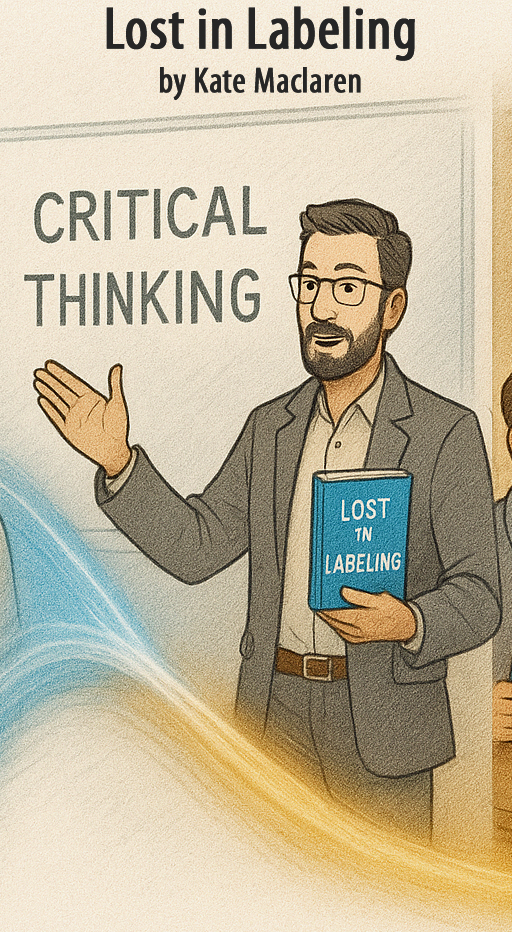
Understanding Ideology, History & Critical Thinking (For educators, learners, thoughtful explorers, and anyone seeking clarity over chaos)
When you and I step together into the heart of political language, ideology, and history, we begin a journey that so few people today ever take. Not because they don’t care — but because our world has become loud, frantic, and relentlessly reactive. So in this section of the book, we slow everything down. We look beneath the slogans. We examine ideas instead of insults. We rebuild the ability to think, question, and understand again — not as adversaries, but as fellow travelers who want to know how we got here, and how we move forward.
- We explore how language has been distorted — and how to reclaim its truth.
One of the first things we face together is the way political language has been turned into a weapon. Words like socialist, fascist, communist, and tyrant get hurled around without meaning, precision, or responsibility — used “as fear-inducing buzzwords meant to manipulate public perception”. You and I dig into why this matters. When words lose their meaning, people lose their ability to think. And when thinking collapses, fear rushes in to replace it. We talk about how: “Facts no longer matter; repetition does.” Together, we examine how repetition becomes propaganda, how fear becomes currency, and how clarity restores power and dignity to our conversations.
- We explore the death of thought — and how to revive it.
You and I spend honest time acknowledging something painful: we have stopped thinking. Not because we don’t want to, but because the machinery around us rewards outrage instead of insight. “We scroll. We react. But we rarely think.” And when we stop thinking, something even more dangerous happens — we become vulnerable to manipulation. Anger is engineered now. Outrage is designed. The chilling clarity is that “Anger spreads faster than insight, and the system knows it.” So in this section, we rebuild not just the skill of thinking, but the desire to think. You and I talk about curiosity as courage, about humility as intelligence, about reclaiming the pause between stimulus and response — that sacred space where wisdom is born.
- We explore America’s historical roots — and why understanding them heals division.
Many people know facts about their ancestors; far fewer understand the fears, pressures, and world events that shaped them. You and I explore how immigration, war, scarcity, and culture formed the ideologies people still carry — often without realizing it. This process helps guide you into a compassionate understanding of history: “Unity came not from sameness, but from embracing the contributions of many.”
Ideology is never born in a vacuum. It’s shaped by hunger, by hope, by injustice, by survival. Once we see that, political differences soften. Understanding replaces condemnation. That’s the moment people finally say, “I get why they think that now.”
And that is the lifeblood of healing.
In addition to all this, you will also explore…
- How media rewires the brain to reward outrage over understanding
- How family systems pass down political beliefs (and wounds)
- How assumptions shut down dialogue before it begins
- How to ask better questions and hold space for complex answers
- Why humility is not weakness, but the doorway to wisdom
- And above all: how critical thinking becomes an act of leadership — in your own home, in your community, and in every conversation you touch.
.View suggested discussion guides for various groups here: Start the Conversation.